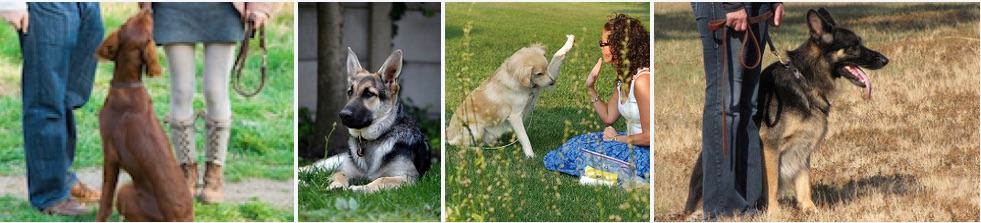


Dog Training Tips...
...A number of Tips and Tricks can be delivered in a positive way - and Dogs Love it.
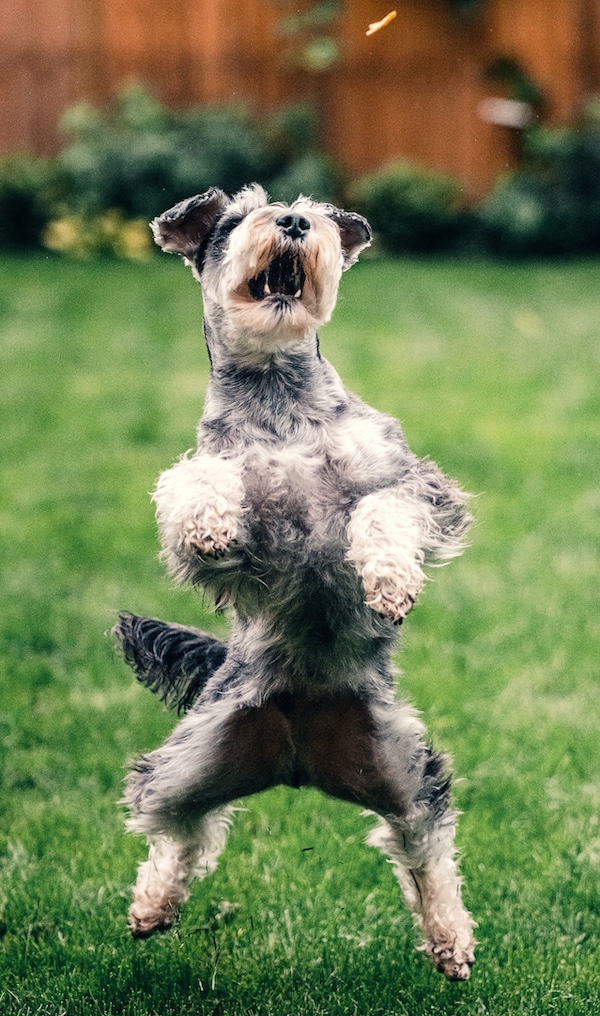 Catch It!
If you love playing catch with your dog - but your dog is not quite into it - then it needs some positive reinforcement !
Housebreaking Versus Housetraining
Housebreaking a puppy starts with the wrong premise – breaking. It’s as if you want to make the puppy stop being a puppy and function like a perfect little toy. That’s neither fair nor realistic.
A pet owner who wants to establish a positive relationship with the pet is focused on housetraining. This approach shows the puppy how to live comfortably in your environment.
Forget the old school methods that teach you to start paper training and swatting a puppy the first day it’s home. Whether you bring home a puppy or an adult dog, you’re taking this animal from the environment it knows and going into an environment that’s totally foreign to it.
The dog has no idea what room is okay to go in and what room is off limits. A shelter dog or crated puppy is so excited to have space to walk and freedom to roam that your home is a virtual theme park of wonders. Add to that the presence of other pets or children and the excitement is almost too much to contain.
Housetraining takes a lot of your time. You need to work with your dog in every room. - There is a dedicated section in the Training program on House Training - The right Way - so see for yourself here..
Reaction to New Experiences
Training your dog to accept new and varied experiences is very important - you could ask your friends to help you by setting up various situations that he is no used to. Take him to public places as soon as possible to get him accustomed to the noises in the world, if you don't, you may end up with a neurotic dog that is afraid of his own shadow.
One of the most important of these new experiences is meeting new people. Dogs may feel intimidated by people who look, talk, and dress or are just different from their family. We go into this in depth - and it is vital that they fit in with your routine - hence we believe it is important for them to know this. See for yourself just how easy it is once you know how right here.
Curing Whining. (which can be very very annoying to you and your neighbours and friends).
Training Modules
A lot is covered in the detailed training modules
and explained in detail on the very next page here..
Special Trick Videos - Become the expert with this Detailed Step by Step Trick Training. In record time! 
Successfully tech your dog to...
- Take a Bow !
- Cover his Eyes (‘Shame on You’)
- Dance
- Shake hands
- Howl
- Play dead
- Roll over
Puppies
Puppies chew "stuff." They chew on whatever is available. They aren't connoisseurs of the best chewing materials. They'll chew on an old house slipper or a new pair of Pradas; one is just as good as the other from the puppy's point of view. The corner of an antique table works just as well as the corner of a chew toy when a puppy wants to chew. If your puppy chews on your furniture, your shoes, your hands, or electric wires, it isn't the puppy's fault. It just needs training.
Sometimes dogs chew for the purpose of comforting themselves. Chewing relieves tension and stress in dogs. Dogs don't have "hands." They use their mouths to explore their world and the things that are in it.
But no matter what purpose your dog or puppy's chewing is satisfying for him, for you the objective is to protect your "stuff" from becoming chewing material. Remember that your dog really does want to make you happy. He doesn't want to do anything that will make you unhappy. But it is up to you to get the information about what is acceptable to chew and what is not acceptable to chew across to him.
Obedience training can help. Substituting a "satisfactory" chew for an "unsatisfactory" chew consistently can help. Meanwhile, You may just want to keep your "stuff" out of the dog's reach - at least until you've commenced with that training.
"Walkies"
Teaching your dog to walk on a lead is important to his safety and yours especially if he is a large dog. But - that can be a challenge unless it is used to it. Dog Training will help teach your dog exactly what to do, and that being on a lead is not a bad thing.
You may want to attach the lead to his collar and let him drag it around for a while, be sure that it doesn't get tangled up in something and hurt him. At least allow him to smell and become familiar with the lead, be sure that the collar and lead are comfortable and fit properly.
A collar should allow you to place 4 fingers between it and the dogs neck. Regardless of how big your dog will get in the future, don't buy him a lead or collar that is
too heavy as it will bug them after a while.
With the dog on your left side, hold the lead and reward in your right hand, use your left hand to hold the slack in the lead. Get his attention and give him the command to "sit". As you walk, start off with your left foot, as he walks beside you; give him the "heel" command. If he tries to pull forward, slide your left hand down the lead and gently pull back on the collar until he is in the heel position (his shoulder to your left knee). When he is in the correct "heel" position, praise him and give him the reward, calling him a good dog. Then give the command to "sit" repeating the good dog, verbal rewards during training are as important to him as treats. Once he learns to heel inside, moving from room to room, you should take him outside and continue to train him to the lead.
Obviously This can be taught a lot batter from the registered dog training herself ! Be sure to see for yourself on the training module page here.
Remember that This Whole Training Success program is As Seen on...

We look forward to Sharing Real Testimonials and real Examples on the Very Next Page.
 So, what are you waiting for ? Start Learning the Actual Steps to Change your Dogs Behaviour for Good Here now. Happy times !
 Cummings Group Pty Ltd : ACN:132 108 260 : PO Box 1288 Elanora, QLD 4221, AU : Privacy Policy : Disclaimer